
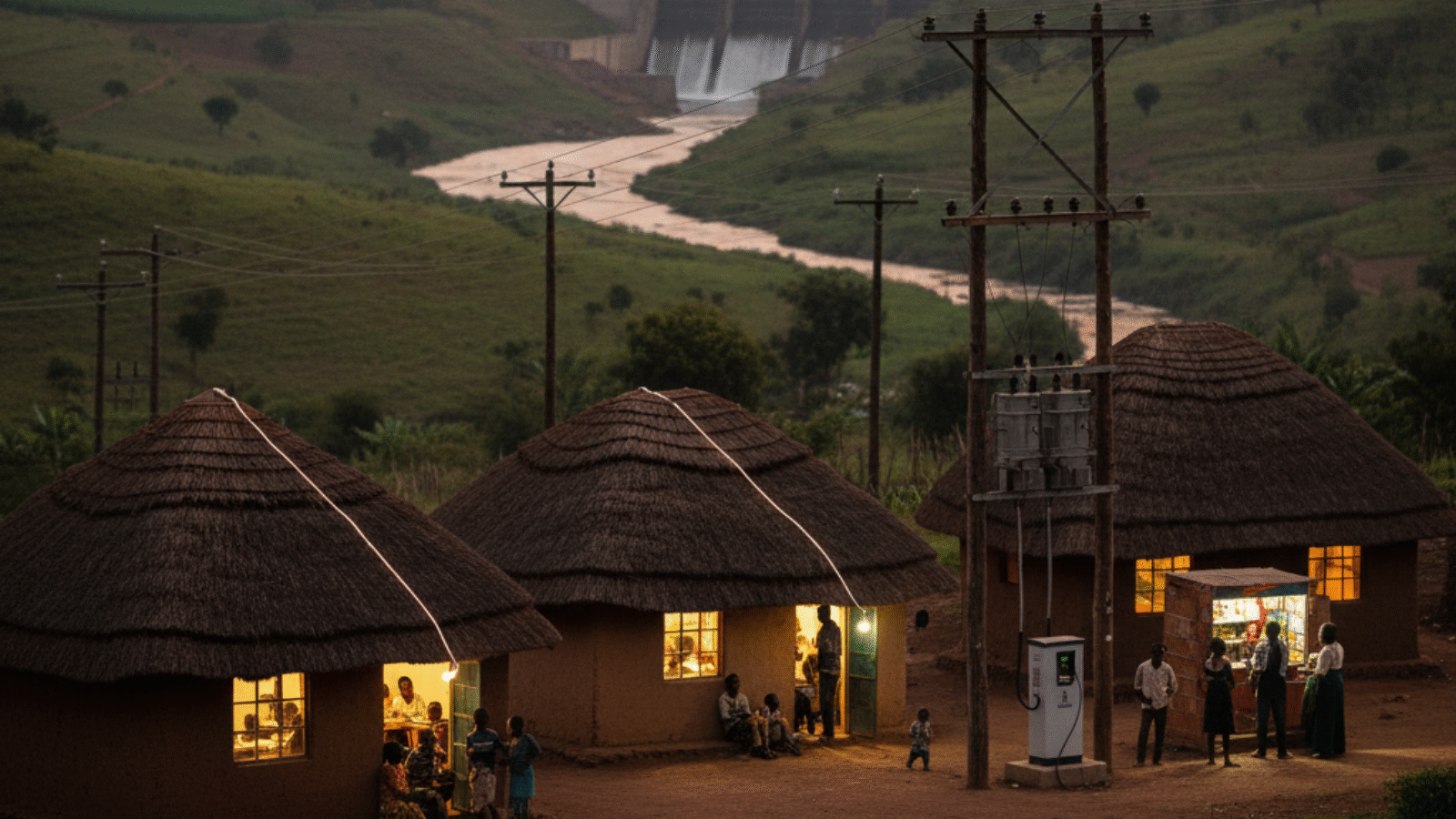
The construction of a major hydropower dam, while essential for national energy goals, inherently alters the local landscape and community life. For the 450 MW Mamfe Hydropower Project, adherence to high environmental and social standards—both national and international (like those of the World Bank and African Development Bank)—is non-negotiable. This week, we detail the key…
Environmental Impact and Mitigation Measures
The project is a run-of-river scheme, which, compared to a storage dam, has a relatively smaller reservoir area. This minimizes the extent of the impacts, but significant environmental challenges remain.
Key Impact Area Detailed Mitigation Measures
Biodiversity Loss (Aquatic) Maintaining an Environmental Flow Regime (EFR) to ensure a guaranteed minimum amount of water remains in the dewatered river section downstream of the dam. This is critical for protecting the river’s unique aquatic life and maintaining downstream ecosystem health.
Reservoir Habitat Loss Habitat restoration programs in surrounding areas and compensatory tree planting to offset forest and vegetation loss in the reservoir inundation zone.
Water Quality Strict construction site management plans to prevent fuel spills, waste runoff, and sedimentation of the river. During operation, routine monitoring of water quality (temperature, dissolved oxygen) in the reservoir.
Sedimentation Designing the dam and reservoir to include features (like sluicing outlets) that manage sediment flow to maintain the long-term viability of the reservoir and downstream river morphology.
Climate Resilience Incorporating design features and operating rules that account for future climate variability, such as changes in rainfall and river flow patterns.
Social Impact, Resettlement, and Livelihood Restoration
The social components of the ESIA focus on the displacement of people and the disruption of traditional livelihoods, primarily through a Resettlement Action Plan (RAP) and a Livelihood Restoration Plan (LRP).
1. Involuntary Resettlement and Compensation
While the run-of-river design minimizes large-scale displacement, some physical relocation will occur due to the dam site and the creation of the small reservoir.
Compensation: All physically and economically displaced households will receive fair and timely compensation for lost land, structures, crops, and assets based on replacement value.
Relocation: Relocated communities will be moved to new, developed sites with improved infrastructure, including access to water, sanitation, and social services (schools, clinics). The focus is on ensuring those affected are made “better off” than before the project.
2. Livelihood Restoration
The project impacts livelihoods linked to the river,primarily fishing, sand mining, and river-bank farming.
Financial Support: Providing transition compensation to offset lost income during the disruption phase.
Training and Development: Offering vocational training programs in new skills (e.g., modern agriculture, aquaculture/fish farming, trades) to diversify income sources away from the immediately affected river areas.
Local Employment: Prioritizing the recruitment of qualified local residents for construction and, subsequently, for the long-term operational and maintenance jobs at the power plant.
The Local Benefit Sharing Mechanism
To ensure the project provides tangible, direct benefits to the host communities, the Mamfe Project will implement a comprehensive Local Development Plan (LDP). This goes beyond simple compensation to establish the local population as a partner and direct beneficiary.
Project Royalties: A portion of the project’s revenues, potentially through royalties paid by the power producer, will be earmarked for a dedicated Local Development Fund.
Community Investment: This fund will finance and execute local priority projects such as:
Electrification: Extending the new electricity grid to neighboring villages.
Social Infrastructure: Building and renovating schools, health centers, and community halls.
Economic Hubs: Developing markets and improved road access to foster new local economic activities.
By adopting these robust environmental and social management systems, the Mamfe Project aims to deliver on its national mandate while ensuring the environmental integrity of the Manyu River and improving the socio-economic well-being of its host communities.