
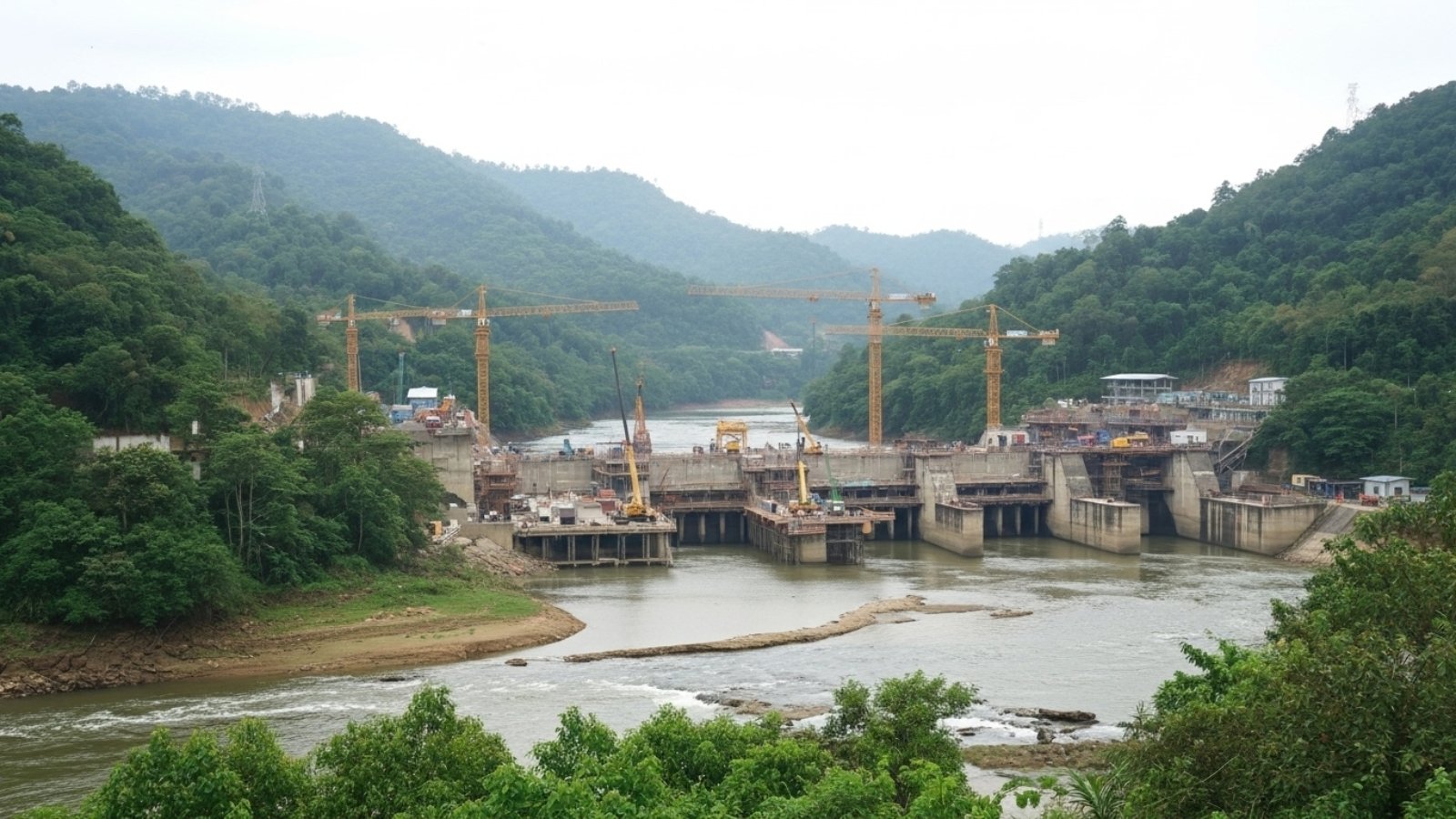
Construction of the Mamfe Hydropower Plant's physical structures is just one part of the journey. The final, critical stages involve building the infrastructure to get the power to millions of customers and then bringing the plant itself online. This blog post details the power evacuation strategy and the methodical steps for commercial commissioning.
Evacuating the 450 MW
The power generated by the Mamfe plant must be safely and reliably transmitted to the national grid, which is then managed by the state-owned National Electricity Transmission Company (Sonatrel).
1. Connecting to the Southern Interconnected Network (SIN)
The Hub: Cameroon’s primary power grid is the Southern Interconnected Network (SIN), which serves approximately 94% of the country’s electricity consumers across six of its ten regions, including the major economic centers of Yaoundé and Douala.
The Evacuation Line: The Mamfe project requires the construction of a dedicated high-voltage (e.g., 225 kV) transmission line. This line will run from a new substation built at the Mamfe plant site to a major existing node on the SIN, such as a large new substation in the nearest large city.
Analogy: Think of this as a high-speed electricity highway that connects the new power source directly to the main energy motorway, ensuring maximum power flow without bottlenecks.
2. Transmission Line Development
The power evacuation infrastructure is a critical component of the overall project and is developed under strict technical standards.
Component Responsibility Purpose
Generator Step-Up (GSU) Transformer Project Company (BOT Consortium) Converts the low-voltage electricity from the generators to the high-voltage (225kV) needed for long-distance transmission.
On-Site Substation Project Company (BOT Consortium) A switching and protection hub for connecting the power plant to the transmission line.
Transmission Line (e.g., 225 kV) National Transmission Company (Sonatrel) or Project Company Carries the 450 MW of power from the dam site to the main grid connection point. The line length is determined by the distance to the nearest suitable grid node.
Grid Substation Connection National Transmission Company (Sonatrel) The final connection point where Mamfe’s power is merged with the electricity from other national power sources.
Commissioning the Plant for Commercial Operation
Commissioning is the final, multi-step process that verifies the plant is safe, reliable, and performing to its design specifications before commercial operation begins.
1. The Commissioning Phase
The commissioning involves sequential testing of all components, typically spanning several months:
Dry Tests: Electrical and mechanical equipment (turbines, generators, controls) are tested for basic functionality before water is introduced.
Reservoir Impoundment: The dam gates are closed, allowing the reservoir to fill. This is a crucial, planned process that can take a significant amount of time.
Wet and Load Tests: Water is introduced to the turbines, and each unit is spun up to maximum speed, generating power. The electricity is progressively injected into the grid for the first time.
Performance Testing: Formal, technical tests are conducted to verify the turbine hydraulic efficiency and the generator electrical efficiency to ensure the plant meets the guaranteed performance targets outlined in the Power Purchase Agreement (PPA).
2. Commercial Operation Date (COD)
The Commercial Operation Date (COD) is a key contractual milestone.
Definition: COD is declared after all units have passed their performance and reliability tests (often a 30-day continuous reliability run). This date marks the official start of the power plant’s revenue generation under the PPA.
Impact: From this date, the plant begins supplying its full 450 MW capacity to the SIN, providing a major boost to national power stability and allowing the country to reduce its reliance on more expensive, polluting thermal power generation.
The completion of the Mamfe Hydropower Project will not only be a triumph of engineering and finance but a fundamental turning point for Cameroon’s energy independence and industrial aspirations.